When a powerful tornado tore through northeastern Wisconsin on July 27, families across the Fox Valley suddenly faced problems they had never expected.
Homes were damaged. Families were displaced. Some children found themselves sleeping in hotels instead of their own bedrooms, separated from familiar belongings, toys and even pets. The storm had passed, but for many families, the disruption was only beginning.
Nine-year-old Katelyn Much understood something about that disruption that adults might easily overlook.
Adults were understandably thinking about damaged roofs, insurance claims, cleanup crews and where families would live.
Katelyn was thinking about the kids.
She knew children whose families had been affected by the tornado. She understood that losing access to a bedroom or favorite toy could feel enormous to a child, especially when everything else around them had suddenly become uncertain.
So Katelyn decided to do something about it.
She created what she called “Kid Kind Bags.”
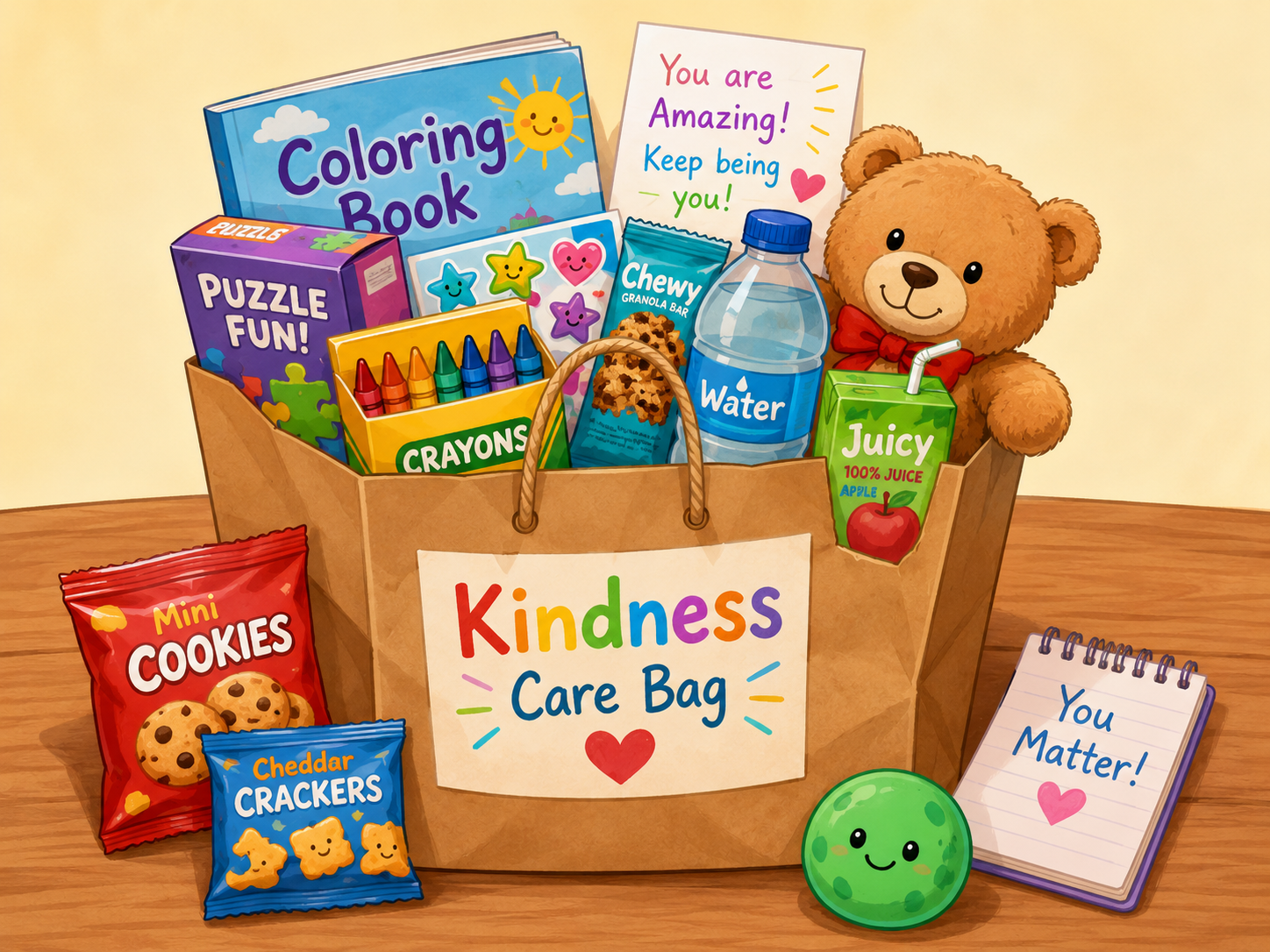
The idea was simple: put together bags filled with things that might give children a few moments of comfort and normalcy while their families dealt with the aftermath of the storm.
The bags would contain snacks, treats, drinks, games, craft projects, toys and other small surprises. They would not repair a house or replace everything that had been lost.
That was not the point.
Katelyn wanted the children receiving them to have something of their own to open and enjoy during a frightening and confusing time.
The idea quickly became much larger than she initially imagined.
Donations began arriving from individuals, families and businesses. Volunteers joined the effort. By Friday, August 7, Katelyn and a group of helpers gathered at a restaurant in Kaukauna to assemble 120 Kid Kind Bags for children affected by the tornado.
The donated supplies were valued at more than $5,000.
And Katelyn added one more personal touch.
Each bag included a card signed by her.
For Katelyn, this was not simply about handing out things. She wanted children to know that someone was thinking about them.
That distinction matters.
After a disaster, communities often rally around immediate necessities. People donate money. Volunteers clear debris. Organizations distribute food and clothing. Those efforts are essential.
But children experience disasters differently than adults.
A child may not understand an insurance deductible or the extent of structural damage to a house. They understand that their stuffed animals are gone. They understand that they are sleeping somewhere unfamiliar. They understand that their routines have disappeared and that the adults around them are worried.
Katelyn seemed to understand that instinctively.
Her solution was not complicated.
Give children something familiar. Give them something fun. Give them something that belongs to them. Give them a reason to smile.
The Kid Kind Bags are the largest project Katelyn’s kindness efforts have taken on so far, but helping others is not new to her.
Katelyn began turning her birthdays into opportunities to help other people when she was just five years old. Instead of concentrating entirely on presents for herself, she began collecting items for causes she cared about.
For one birthday, she gathered supplies for an animal shelter. Another year, she collected stuffed animals for children in a hospital. Later, she created birthday cake kits for families who might otherwise be unable to afford a birthday celebration. She has collected books, created cards for veterans and assembled care packages for cancer patients.
Over time, those projects became Katelyn’s Kindness, an ongoing effort built around a remarkably straightforward belief: helping other people feels good, and you do not have to wait until you are grown up to begin.
That history helps explain why, when a tornado struck communities near her home, Katelyn’s first instinct was not simply to feel bad about what had happened.
She started thinking about what she could do.
There is an important difference between sympathy and action. Many people can see suffering and think, That is terrible. Kindness adds another question:
What can I do about it?
Katelyn could not rebuild the damaged homes in Appleton, Menasha and Neenah. She could not restore everything families had lost. She could not make the tornado disappear.
But she could fill a bag.
And when enough people joined her, one bag became 120. That is one of the remarkable things about kindness. The first action does not have to be enormous.
One person has an idea. Another person donates a toy. Someone else brings snacks. A business provides supplies. Volunteers gather around tables and begin filling bags.
Before long, a small idea has become something much larger than any one person could have accomplished alone.
Katelyn may only be nine years old, but her response to the tornado demonstrates something adults sometimes forget.
We do not have to be able to fix everything before we decide to help with something.
There will always be problems too large for one person to solve. There will always be disasters we cannot undo. There will always be people experiencing difficulties we cannot completely remove. But there is almost always something we can do.
And sometimes it is a bag filled with snacks, toys, games and a handwritten card for a child whose world has suddenly changed.
Adult Summary
Nine-year-old Katelyn Much responded to the July 27 tornadoes in Wisconsin’s Fox Valley by focusing on something adults might easily overlook: how frightening and disruptive a disaster can be for children.
Through her project, Katelyn’s Kindness, she created “Kid Kind Bags” filled with snacks, drinks, games, crafts, toys and other small comforts. With help from volunteers, families and businesses, 120 bags were assembled for children affected by the storms, with donated supplies valued at more than $5,000. Each bag also included a card signed by Katelyn.
Helping others is not new to Katelyn. Since she was five years old, she has used birthdays and other opportunities to collect items for animal shelters, hospitalized children, veterans, families in need and cancer patients.
Her response to the tornado is a reminder that we do not have to solve an entire problem before we can make a difference. Sometimes kindness begins by simply asking, “What can I do?”
Elf Notes
The North Pole elves noticed that Katelyn looked at the same disaster everyone else saw, but she saw it through the eyes of a child.
Adults were dealing with damaged homes, insurance, cleanup and recovery. Katelyn thought about the children who suddenly did not have their familiar bedrooms, toys and routines.
They also noticed that she did not allow the size of the problem to stop her. Katelyn could not rebuild a home, but she could fill a bag. When other people joined her, one small idea became 120 acts of kindness.
And the elves especially liked the handwritten cards. The toys and snacks offered comfort, but the cards carried an equally important message:
Someone is thinking about you.
Kindness Takeaway
We do not have to fix everything before we can help with something.
Big problems can make us feel powerless, but kindness rarely begins with a perfect solution. It begins by noticing what we can do with the time, abilities and resources we already have.
Katelyn could not undo the tornado.
She could make one child’s difficult day a little easier.
Then another.
Then another.
Sometimes changing the world begins by changing one small part of it.